
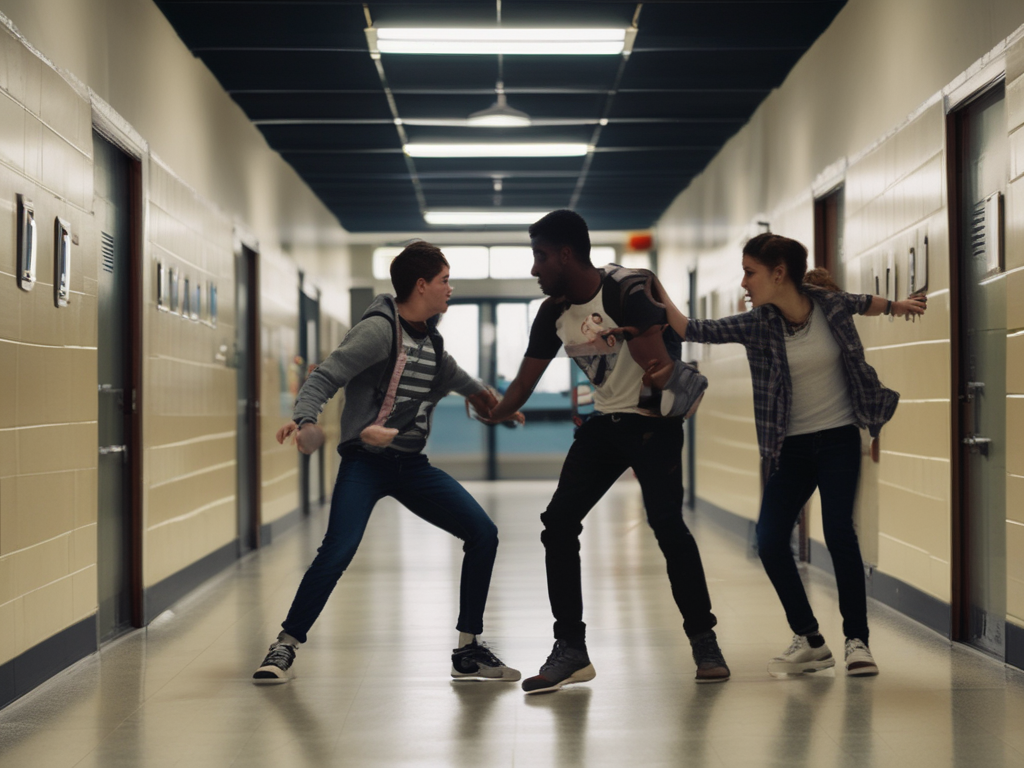
Have you ever wondered about the surging tide of school violence, its damage, and the steps we can take to mitigate it? Brace yourself for a compelling episode of Insights into Teens as we pull back the curtain on this alarming issue, armed with fresh data from the CDC’s youth risk behavior survey. The figures tell a grim tale of bullying, hostility, and threats. We also touch upon the zero tolerance policy and its evolution in schools over time.
As we peel back the layers, we unravel the lasting impacts of school violence on its victims and bystanders. We’re talking about distressing mental health issues such as depression, anxiety, and fear that can linger into adulthood. We also discuss how violence disrupts the sense of safety in school environments, complicating a child’s ability to deal with life’s challenges.
Not just identifying the problem, we pivot towards solutions. We’re joined by Madison, a brave high school student who shares her experiences and observations. We champion proactive strategies such as recognizing and reaching out to students who display signs of distress or aggression. We also stress the need for a unified front comprising teachers, administrators, parents, and community members all working together. Open channels of communication with trusted adults can make a massive difference, and this episode reminds us all of the crucial need to stay vigilant and responsive to potential threats. Come join the conversation, and let’s work together to make our schools safer.
Show Notes
INTRO THEME]
[INTRODUCTIONS]
Insights Into Teens: Episode 179 “Fighting in School”
My calm and collected co-host Madison Whalen
Summary
On this episode of Insights Into Teens as we delve into the hidden layers of school violence.
Beyond the shocking headlines lie the pervasive issues of bullying, insecurity, and more.
We’ll discuss the often overlooked factors that contribute to this critical problem, explore its impact on students, and uncover strategies to effectively address and prevent school violence.
Show Plugs
Subscriptions:
Apple Podcasts
Spotify
Google Podcasts
iHeartRadio
Tunein
Contact Info
Email us at:
Comments@insightsintothings.com
Twitter:
@insights_things
Hi-res videos on Youtube:
http://www.youtube.com/insightsintothings
Streaming 5 days a week on Twitch:
http://www.twitch.tv/insightsintothings
Audio Versions:
http://podcast.insightsintoteens.com/#
Facebook:
https://www.facebook.com/InsightsIntoThingsPodcast/
Instagram
https://www.instagram.com/insightsintothings/
Links to all these on the web Web:
https://www.insightsintothings.com
[TRANSITION]
[SEGMENT 1]
What is School Violence
https://www.verywellmind.com/school-violence-types-causes-impact-and-prevention-5216631
https://bit.ly/3TrwbXN
School violence isn’t confined to the dramatic headlines; it’s a pervasive issue that affects 246 million children annually.
This problem isn’t gender-neutral either, as girls and gender non-conforming individuals bear a disproportionate brunt.
Within the educational sphere, violence takes on various forms, with fellow students being the primary perpetrators.
It spans verbal, sexual, and physical realms, sometimes involving weapons, but not exclusively.
Acts that leave someone feeling threatened or harmed, regardless of the method, fall under this umbrella.
Defining school violence involves recognizing its occurrence in the school setting.
It’s not just a specific type of violence but describes acts that disrupt learning and harm students, schools, and the community at large.
Examples of this encompass bullying, cyberbullying, fights, weapon use, gang-related incidents, and sexual violence.
The locations where these events unfold include school property, the journey to and from school, during school-sponsored events, and even on the way to or from such events.
How big is the problem?
The scope of the problem of school violence becomes clear when we dive into the data.
In 2019, the CDC conducted a nationwide Youth Risk Behavior Survey, engaging over 13,000 high school students from across the United States.
What emerged from this survey were stark statistics that shed light on the prevalence and nature of school violence:
Bullying
Approximately 1 in 5 high school students disclosed that they had been bullied on school property within the past year.
The hallways and classrooms that should be safe havens for learning can sadly become arenas of hostility for a significant portion of students.
Physical Confrontations
The survey revealed that 8% of high school students had been involved in physical fights on school property one or more times during the 12 months preceding the survey.
This troubling statistic underscores the prevalence of confrontations that extend beyond words and escalate into physical altercations.
Weapons and Threats
More than 7% of high school students reported that they had been threatened or injured with a weapon while on school property within the 12 months leading up to the survey.
The presence of weapons in educational environments and the alarming frequency of threats pose a significant risk to the safety and well-being of students.
Fear and Absence
The survey unearthed that almost 9% of high school students had missed at least one day of school within the preceding 30 days due to concerns about safety.
This statistic paints a grim picture of students’ apprehension, with their desire for education overshadowed by fears of violence.
Causes of School Violence
The causes of school violence are intricate and multifaceted, often defying simple explanations.
Understanding why an individual engages in such behavior requires a deeper exploration of their experiences and influences.
Several factors contribute to this complex issue, highlighting the diverse landscape that can lead to acts of violence within educational settings.
Diverse Motivations
School violence may stem from a variety of sources.
An individual could have endured bullying or social rejection, driving them to lash out.
Academic pressure, while a norm in educational environments, can escalate to a point where it becomes a trigger for aggressive behavior.
Moreover, exposure to violence at home, in the neighborhood, on screens, or in games can influence a person’s actions.
Media Influence
While connections between media consumption and violent behavior lack definitive proof, exposure to violence in various forms can potentially impact an individual’s perception of acceptable behavior.
The debate over the influence of media—like television, video games, and movies—on violent tendencies remains open, serving as a point of contention in understanding the roots of school violence.
Complex Risk Factors
Certain factors increase the likelihood of a child engaging in school violence.
Poor academic performance, a history of prior violent behavior, an impulsive personality, and mental health conditions can collectively contribute.
Additionally, being a witness to or victim of violence, substance use, a dysfunctional family environment, domestic violence, and access to weapons all play roles in shaping a child’s potential for violent actions.
Environmental Context
The community context also plays a crucial role.
Surroundings marked by poverty, high crime rates, or the influence of delinquent peers can contribute to the development of violent tendencies.
A child’s exposure to a dysfunctional environment outside the school walls can intertwine with their behavior within them.
[AD1: SSE]
[SEGMENT 2]
The Impact of School Violence
The repercussions of school violence extend far beyond the immediate incident, affecting both the victims and the perpetrators.
Understanding how violence leaves its mark is vital in comprehending the urgency of addressing this pressing issue.
For children who have either been victims of violence or have witnessed it, violence can seem like a twisted avenue to attain safety.
This skewed perception stems from the belief that strength and security can only be achieved through violent means.
When they resort to violence, there’s often an initial sense of relief, as it momentarily fulfills their emotional need for strength and safety.
However, this sense of satisfaction is transient, overshadowed by the looming fear of consequences.
The fear of punishment or retaliation triggers anger, which in turn can lead to a cycle of escalating violence.
These children often find themselves trapped in a paradox:
they believe they must protect themselves through violence, yet this very violence triggers further emotional turmoil and potential retaliation.
Breaking this cycle is crucial.
Children need guidance to realize that while violence might provide fleeting relief, it inevitably spirals into more profound problems.
They must comprehend that violence not only fails to address their underlying needs but also exacerbates their predicament.
Interventions and support mechanisms are vital in assisting these children to replace their skewed perceptions with healthier coping strategies.
Impact on Child Victims of School Violence
School violence leaves profound and lasting effects on its victims, both physically and emotionally.
These consequences ripple through various aspects of a child’s life, painting a bleak picture of the toll it takes on their well-being.
Physically, victims of school violence can endure a range of injuries, from minor cuts and bruises to broken bones, concussions, and even fatal outcomes.
Emotionally, the aftermath includes a spectrum of psychological distress, encompassing depression, anxiety, and rage.
The weight of these emotions can disrupt their mental equilibrium, casting a shadow over their day-to-day lives.
Victims’ academic performance often suffers as their focus wavers.
The lingering fear of recurrence can make concentrating in school a Herculean task, leading to compromised learning experiences.
School, intended as a haven for education, becomes a place of unease.
Trauma from school violence is not confined to the immediate aftermath.
Its psychological ramifications can be considerable, especially when experienced over an extended period.
In the case of young minds whose brains are still developing, trauma can trigger survival mode, adversely affecting attention, concentration, emotional regulation, and long-term health.
A 2019 study underscores the potential long-term consequences of school violence.
Victims are at risk of grappling with mental and physical health conditions that span attachment disorders, substance abuse, obesity, diabetes, cancer, heart disease, and respiratory issues.
The extent of adversity experienced in childhood correlates with the degree of risk to physical and mental well-being in adulthood.
Impact on Children Who Witness School Violence
The impact of school violence isn’t confined to its immediate victims; those who bear witness to such incidents also suffer profound emotional repercussions.
The toll on these young witnesses is often hidden, yet its effects can be just as enduring and far-reaching.
Children who witness school violence may grapple with complex emotions.
They might feel a sense of guilt for not intervening or stopping the violence, even though fear could have paralyzed them from taking action.
The weight of these conflicting emotions can create a heavy burden on their young minds.
Remarkably, the brains of witnesses to violence can react similarly to those of victims.
The primal “fight or flight” response can trigger, flooding their minds with stress hormones and shaping their perception of danger.
This physiological response can have lasting impacts on their emotional and psychological well-being.
The aftermath of witnessing violence can shatter a child’s fundamental beliefs about the world.
The illusion of safety that once enveloped their reality is disrupted, leaving them with a sense of vulnerability.
This new lens through which they view the world can significantly damage their mental health, fostering anxiety, distrust, and even depression.
For children to grow into emotionally resilient individuals, they need to first experience a foundation of safety and care.
The ability to cope with threats and challenges stems from feeling secure and self-assured.
Witnessing violence without the reassurance of safety can hinder a child’s ability to navigate the complexities of life.
[AD2: ENTERTAINMENT]
[SEGMENT 3]
Impact on Parents
The aftermath of school violence triggers a spectrum of reactions among parents, revealing the intricate emotional landscape they navigate as they grapple with the safety and well-being of their children.
The reactions of parents to school violence are as diverse as the individuals themselves.
This diversity stems from their personal beliefs, past experiences, and cultural values.
These reactions provide a glimpse into the complex emotions parents experience when faced with the unsettling reality of school violence.
In some instances, parents may inadvertently contribute to the cycle of violence.
Misinterpreting aggression as strength, they might encourage their children to respond to bullying with similar behavior.
This misconception perpetuates a harmful cycle and fails to address the root causes of violence.
Other parents, in an effort to protect their children, might attempt to teach them behaviors that they believe will prevent them from becoming targets of bullying or violence.
However, this approach often proves futile and counterproductive.
The child may internalize the idea that they are responsible for the violence they experience, leading to self-blame and emotional distress.
In contrast, some parents adopt a proactive stance.
They work closely with the school, collaborate with teachers and administrators, and challenge the system if necessary, all to create a safe environment for their children.
These parents strive to empower their children by ensuring they can learn without fear.
Preventing School Violence
Every student deserves the fundamental right to learn in an environment that is safe, secure, and conducive to their growth.
The encouraging news is that school violence is not an inevitable reality; it can be prevented through concerted efforts and strategic measures.
The origins of school violence are complex and multifaceted, rooted in a multitude of factors.
Preventing its occurrence requires a comprehensive approach that addresses both risk factors that contribute to violence and protective factors that shield individuals from it.
By understanding these dynamics, we can tailor interventions to effectively curtail the prevalence of violence.
Preventing school violence demands the engagement of a diverse range of stakeholders.
Teachers, administrators, parents, community members, and even students themselves have a role to play in creating a safer school environment.
Collaborative efforts leverage the strengths of each group and create a united front against violence.
Encouraging students to report any signs of violent behavior is essential.
Many schools offer anonymous tip lines, providing a safe space for students to share their concerns without fear of retaliation.
Children who witness or experience violence should be encouraged to speak up.
The importance of open communication with trusted adults—parents, teachers, and counselors—cannot be overstated.
Consistent reporting ensures that concerns are addressed promptly and effectively.
Recognizing and reaching out to students who display signs of distress or aggression is crucial.
By offering support and understanding, we can help them navigate their emotions and provide alternatives to violent behavior.
Being vigilant about potential warning signs of violence is pivotal.
These signs might include fascination with weapons, harming animals, bullying, threatening others, or displaying aggression.
Recognizing and reporting these signals to parents, teachers, or school authorities enables early intervention, potentially diverting a child away from a violent path and towards a path of help and healing.
[TRANSITION]
[CLOSE]
Closing thoughts shoutouts
[OUTRO AND CREDITS]
Show Plugs
Subscriptions:
Apple Podcasts
Spotify
Google Podcasts
Stitcher
iHeartRadio
Tunein
Contact Info
Email us at:
Comments@insightsintothings.com
Twitter:
@insights_things
Hi-res videos on Youtube:
http://www.youtube.com/insightsintothings
Streaming 5 days a week on Twitch:
http://www.twitch.tv/insightsintothings
Audio Versions:
http://podcast.insightsintoteens.com/#
Facebook:
https://www.facebook.com/InsightsIntoThingsPodcast/
Instagram
https://www.instagram.com/insightsintothings/
Links to all these on the web Web:
https://www.insightsintothings.com
Transcription
00:00:03:20 – 00:00:43:13
Michelle
Insightful podcasts by informative host for insights into things to a podcast network. And welcome to Insights into Teens, a podcast series exploring the issues and challenges of today’s youth. Your hosts are Joseph and Madison Whalen, a father and daughter team making their way through the challenges of.
00:00:43:13 – 00:00:53:18
Michelle
The teenage years.
00:00:53:21 – 00:01:06:22
Joseph
Welcome to Insights into Teens. This is episode 179 Fighting in School. I’m your host, Joseph Whalen, and my calm and collected co-host, Madison Whalen.
00:01:06:27 – 00:01:07:22
Madison
Hey, everybody.
00:01:07:28 – 00:01:09:15
Joseph
How are you doing today, Maddy?
00:01:09:18 – 00:01:11:15
Madison
Doing all right. How about you?
00:01:11:18 – 00:01:35:15
Joseph
Doing okay. So this is the last in our controversial Yes series that we’re doing a little bit more late than I think last week. Last week, we were we were kind of somber and serious, but for good reason. So we are back this week with something a little bit more lightweight, but no less, you know.
00:01:35:18 – 00:01:38:12
Madison
Controversial and impactful, I’d say.
00:01:38:14 – 00:01:46:19
Joseph
And definitely impactful. Before we get into all that, anything exciting happen to you this week?
00:01:46:22 – 00:01:49:18
Madison
No, no, entirely.
00:01:49:21 – 00:01:54:09
Joseph
Well, a little controversy about your your school schedule that we have to sort out still.
00:01:54:09 – 00:01:58:10
Madison
Yeah, that’s fair. I mean, school starting. So that’s fun.
00:01:58:11 – 00:02:00:22
Joseph
That’s exciting. That’s starting next week.
00:02:00:25 – 00:02:01:23
Madison
Yep. Thursday.
00:02:01:25 – 00:02:05:14
Joseph
Wow. That is. That’s some exciting stuff. There.
00:02:05:16 – 00:02:06:17
Madison
Yeah.
00:02:06:19 – 00:02:09:15
Joseph
I think your enthusiasm is just overwhelming.
00:02:09:18 – 00:02:16:24
Madison
Yeah. Considering how it’s going so far, how I think it’s going to go, it’s like, Yeah, well, great.
00:02:17:01 – 00:02:41:08
Joseph
We will make the best of it. So in light of you going back to school next week, we have been holding on to this topic for a while now. We’ve actually done the research and prep for before summer, actually before school let out, but we just sort of never got to it in the series before school let out and seem kind of silly talking about fighting in school in the middle of summer.
00:02:41:09 – 00:03:08:15
Joseph
Yeah. So it’s kind of out of context. So I wanted to wait until we were close to school. So on this episode of Insights into Teens, we delve into the hidden layers of school violence beyond the shocking headlines like the pervasive issues of bullying, insecurity and Star Wars music in the background for our video game. Yeah. We’ll discuss the often overlooked factors that contribute to this critical problem.
00:03:08:17 – 00:03:49:29
Joseph
We’ll explore its impact on students, teachers and others, and we’ll uncover strategies to effectively address and prevent school violence. But as always, before we get to that, I wanted to once again invite our listening and viewing audience to subscribe to the podcast. You can find audio versions of this podcast listed as insights into teens. You can find audio and video versions of all of the network’s podcasts listed as insights into things they were pretty much anywhere you get a podcast these days Apple, Spotify, Google, not Stitcher, because they’re going away at the end of the month, which is tomorrow, I think.
00:03:50:02 – 00:03:51:04
Madison
Hmm.
00:03:51:07 – 00:04:12:03
Joseph
But anyway, you know where to get our podcast at this point. I would also invite you to write it and give us your feedback. I mean, we talked about some some pretty hard hitting, controversial, spirited topics over the last nine episodes or so. I’d love to get people’s feedback on them and just let us know what other stuff you’d like us to talk about.
00:04:12:03 – 00:04:41:11
Joseph
You can email us your comments and insights into things XCOM. You can hit us up on Twitter or X or whatever. Ellen’s calling it. This week, we’re at insights underscore things, bringing it links to all that and more on our official website at W WW dot insights into things dot com. Shall we get started. Yes here we go.
00:04:41:13 – 00:05:14:21
Joseph
So what is school violence. So our initial research we took from very well nine.com.au site we use quite frequently they tell us that school violence isn’t confined to the dramatic headlines. It’s pervasive, It’s a pervasive issue that affects 246 million children annually. This problem isn’t gender neutral either, as girls and gender non-conforming individuals bear a disproportionate brunt of it within the educational sphere.
00:05:14:23 – 00:05:37:17
Joseph
Violence takes on various forms, with fellow students being the primary perpetrators. It spans verbal, sexual and physical realms, sometimes involving weapons, but not include exclusively acts that leave someone feeling threatened or harmed, regardless of the method, fall under this umbrella.
00:05:37:19 – 00:06:11:12
Madison
Defining school violence involves recognizing its occurrence in the school setting. It’s not just a specific type of violence, but describes acts that disturb the learning and harmed students, schools and the community at large. Examples of this encompass bullying, cyberbullying, fights, weapon use, gang related incidents and sexual violence. The locations where these events unfold include school property, the journey to and from school during school sponsored events, and even on the way to or from such events.
00:06:11:14 – 00:06:38:00
Joseph
So what really prompted this? A few months back to talk about this topic was there were a number of fights that you were coming home and telling us about, none of which you were involved in, obviously. Yeah, but they were they were fights that had some kind of effect on you, whether it was delaying you getting to school or a fear for your own safety or whatnot.
00:06:38:03 – 00:06:49:14
Joseph
Have you noticed an increase in violence or fights in schools recently? Or is it kind of been at the same level since you’ve been going to school?
00:06:49:16 – 00:07:20:26
Madison
Well, I definitely started to see an increase as like I got older because like when it came to like elementary school, you never really saw like fist fights or like aggressive fights to where like teachers had to get involved. However, I technically heard about my first fight in sixth grade, and ever since then, fights tended to get like more rapid and some of the more quote unquote memorable fights I’ve seen included those when I’ve been in high school.
00:07:21:02 – 00:07:45:02
Joseph
Okay. Now, one of the things that they talk about here is there’s a high percentage of instance incidents in which individuals involved in these fights. At least in the survey games have weapons involved. Have the fights that you’ve seen or heard about in school involved weapons or are they just been fist fights to this point?
00:07:45:04 – 00:07:58:26
Madison
From what I’ve seen, they’ve been fist fights. I haven’t really tried to get like too much knowledge. But for the most part, the kids, I guess, kind of just throw themselves at each other, hoping to knock the other down.
00:07:58:28 – 00:08:01:07
Joseph
Sounds like sumo wrestling.
00:08:01:09 – 00:08:22:17
Madison
I mean, kind of It kind of has been like that. I’ve never like there have been fights that like, happened and I haven’t seen and I’m not sure if they ever tried, if anything like that ever tried to involve a weapon. But from the fights that I’ve actually seen in person or have been around, they’ve never seen to have weapons.
00:08:22:19 – 00:08:52:13
Joseph
Okay, So how big is this problem? The scope of the problem of school violence becomes clear when we dive into the data. In 2019, the CDC conducted a nationwide Youth Risk Behavior survey engaging over 13,000 high school students from across the United States. What emerged from the survey were stark statistics that shed light on the prevalence and nature of school violence.
00:08:52:15 – 00:09:23:06
Joseph
The first takeaway that we get from this report was bullying. Approximately one in five high school students disclosed that they had been bullied on school property within the past year. The hallways and classrooms that should be safe havens for learning can sadly become arenas of hostility for a significant portion of our students. The next thing that they took away from the the study was physical confrontations.
00:09:23:08 – 00:09:45:12
Joseph
The survey revealed that 8% of high school students have been involved in physical fights on school property. One or more times during the 12 months preceding the survey. This troubling statistic underscores the prevalence of confrontations that extend beyond words and escalate into physical altercations.
00:09:45:15 – 00:10:09:03
Madison
The study also recognized that of weapons and threats, more than 7% of high school students reported that they had been threatened or injured with a weapon while on school property within the 12 months leading up to the survey. The presence of weapons in educational environments and the alarming frequency of threats posed a significant risk to the safety and well-being of students.
00:10:09:06 – 00:10:32:08
Madison
Finally, they also mentioned the fear and absence. The survey unearths that almost 9% of high school students had missed at least one day of school within the preceding 30 days due to concerns about safety. This statistic paints a grim picture of students apprehension with their desire for education overshadowed by fears of violence.
00:10:32:11 – 00:11:00:15
Joseph
So things obviously are very different now than when I was in school. But when I was in school, when you had two people fight, they fought and usually the teachers would would get in and break it up and it didn’t matter who started it. There was even back then, there was a zero tolerance policy that whoever was involved in the fight wound up getting punished in some form.
00:11:00:18 – 00:11:18:17
Joseph
Do they still have that kind of zero tolerance policy or is there because I know there’s a lot more anti-bullying in schools now. Is there consideration for the bullying aspect of it? Or if someone hit you and you hit them back or both of you getting detention or suspension for it?
00:11:18:22 – 00:11:39:04
Madison
From what I know, both. If you if someone ends up hitting you and you hit them back, you are going to also be blamed for the incident. Even if you were defending yourself against a bully, even if the bully hits you first, if you hit back, you know that means you’re part of the fight. You’re part of the problem.
00:11:39:04 – 00:12:07:21
Madison
You’re kind of written up as well. And that’s kind of something I actually mentioned last week in the ways of just I don’t I think that’s a bit extreme, especially considering like if someone had been bullied before and had to constantly take it and then finally ended up deciding to fight back against all the abuse they were facing, yet they were going to receive the exact same punishment, which personally, I don’t qualify as being fair.
00:12:07:24 – 00:12:08:20
Madison
Well.
00:12:08:22 – 00:12:22:13
Joseph
My if you’re the victim now, it certainly isn’t fair. But if you’re a teacher who doesn’t have evidence to show who started the fight, it’s fair in that both people get punished for it.
00:12:22:15 – 00:12:24:20
Madison
I mean, I guess.
00:12:24:22 – 00:12:35:03
Joseph
That’s just unfortunately, that’s just the way society works that doesn’t mean that it’s fair. It’s just equal treatment, I guess we should say.
00:12:35:08 – 00:12:35:28
Madison
Yeah.
00:12:36:00 – 00:12:56:23
Joseph
Question that I had about bullying, though, is I know they leaned pretty heavy into bullying through grade school and a lot of the anti-bullying campaigns and stuff like that. Do they do anything with bullying in the high school at this point in time, or have they kind of just backed off on that and let the kids, you know, if you didn’t learn not to bully, then they just leave.
00:12:56:23 – 00:13:01:18
Joseph
You be Or is there some type of enforcement of anti-bullying rules in high school?
00:13:01:23 – 00:13:38:14
Madison
Well, it’s certainly not as aggressive as it was when I was younger. Like, you know, I constantly have assemblies about anti-bullying. You’d see you consistently see the posters about bullying. And like everybody kind of preach the idea that everyone should be friends and whatnot instead of, you know, enemies or whatever. I think by the time we got to high school, it was either, you know, the implication that, like, you should already know not to bully somebody or like they’d mention a more serious instance of it rather than just like, you know, the kind of little kid version of don’t be mean to people.
00:13:38:16 – 00:13:53:05
Madison
I guess it’s also kind of in the line of that, Like they don’t think they know that there are just going to be some. Sometimes you’re not going to get along with people and you just have to learn to tolerate each other. But like, if you get to the point of fighting, then that’s a problem.
00:13:53:07 – 00:14:01:28
Joseph
So there’s there’s I wouldn’t say there’s more tolerance of it than in high school. There’s just less policing of of anti-bullying and sounds like.
00:14:02:01 – 00:14:08:29
Madison
Yeah, I’d say although we have, you know, actual police walking around the school in case, well.
00:14:09:01 – 00:14:13:01
Joseph
That’s fine for other reasons, but we won’t get into that on this podcast.
00:14:13:04 – 00:14:25:03
Madison
Yeah. So I would say that like they don’t really tolerate it, but they also don’t really say anything to, like, convince us to not do it outside of the zero tolerance policy.
00:14:25:04 – 00:14:29:14
Joseph
So there’s no more anti-bullying training that they’re actively engaging in.
00:14:29:16 – 00:14:46:13
Madison
Not really. Even some of like the assemblies, like I’d say they like I said, they kind of more or less focus on other serious subjects and they occasionally and come to encompass the idea of bullying. But it’s not like a every assembly is specifically about anti-bullying anymore.
00:14:46:18 – 00:14:51:06
Joseph
I gotcha. So what are some of the causes of school violence?
00:14:51:09 – 00:15:22:11
Madison
So the causes of school violence are intricate and multifaceted, often defined simple explanations. Understanding why an individual engages in such behavior requires a deeper exploration of their experiences and influences. Several factors contribute to this complex issue, highlighting the diverse landscape that can lead to acts of violence within educational settings. The first thing they mention is diverse motivations. School violence may stem from a variety of sources.
00:15:22:14 – 00:15:46:00
Madison
An individual could have endured bullying or social rejection driving, driving them to lash out. Academic pressure while a norm in an educational environment can escalate to a point where it becomes a trigger for aggressive behavior. Moreover, exposure to violence at home in the neighborhood, on screens or in games can influence a person’s actions.
00:15:46:02 – 00:16:17:00
Joseph
They also talk about media influence, while connections between media consumption and violent behavior lack definitive proof. Exposure to violence in various forms can potentially impact an individual’s perception of acceptable behavior. The debate over the influence of media like television, video games and movies on violent tendencies remains open, serving as a point of contention in understanding the roots of school violence.
00:16:17:03 – 00:16:58:11
Joseph
Complex risk factors are also involved. Certain factors increase, increase the likelihood of a child engaging in school violence, poor academic performance, a history of prior violent behavior and impulsive personality, and mental health conditions can collectively contribute. Additionally, being a witness to or a victim of violence, substance use, or a dysfunctional family environment such as domestic violence or access to weapons all play important roles in shaping child’s a child’s potential for violent actions.
00:16:58:14 – 00:17:30:12
Joseph
And finally, they talk about the environmental context, the community context also plays a crucial role. Surroundings marked by poverty, high crime rates, or the influence of delinquent peers can contribute to the development of violent tendencies. The child’s exposure to a dysfunctional environment outside the school walls can intertwined with their behavior within them. So what do you think of these various races do you like?
00:17:30:15 – 00:17:52:09
Joseph
I see where they put media influence up here and and the first thing that I think is, well, that’s a cop out. We’ve had violent films and violent video games and violent television for 60 years now. And, you know, dude, you didn’t it didn’t make I was always exposed to that sort of thing. And it never made me violent.
00:17:52:11 – 00:18:16:05
Joseph
None of those sources ever made me violent. And I’m one person. I get that it’s entirely possible that it may have a different influence on other people. But a lot of there’s a certain segment of the population that wants to lump everybody into this whole the media is evil. It makes everything violent. And I find a difficult time believing that.
00:18:16:05 – 00:18:17:20
Joseph
What are your thoughts?
00:18:17:22 – 00:18:39:29
Madison
Yeah, I would tend to agree with you for the most part. I definitely don’t think that like technology is evil or videogames tend to cause violence or, you know, anything that, you know, people try to say, to say to make you think that video games are the problem. Because I personally don’t. Because there’s been plenty of evidence at this point.
00:18:39:29 – 00:19:18:04
Madison
Now to point away from the idea that shooting games like cause teens to want to engage in violent activities, although I can understand their argument in one specific instance, and that’s in social media, when they’re exposed to just general people that are kind of just bad for them or exhibit a bad influence, like just screaming for no reason, ranting about literally everything, or just trying to get enough of an online argument over literally anything.
00:19:18:07 – 00:19:33:28
Madison
I can understand that that can cause a certain amount of rage in certain people, and I could see that leading to potential violence. But I’d say seeing the media as a whole just promotes violence in general is an untruth that ends an untrue statement.
00:19:34:00 – 00:19:56:18
Joseph
Well, and I think that’s true. I mean, you know, my point of view, I think social media is the most antisocial piece of technology out there. It literally brings out the worst in human beings for the most part. But you know, that worst isn’t just violence, it’s anger, it’s bigotry, it’s hatred. It’s everything that it brings out in people.
00:19:56:21 – 00:20:23:04
Joseph
So I can’t say that that’s the sole source because there are a lot of perfectly functional people who work on social media. There are people whose entire lives and livelihood are on social media. I think it really comes down to situational. You know, they talk about the fact that there’s diverse, diverse motivations, which is absolutely correct. You know, you have risk factors such as your childhood upbringing.
00:20:23:06 – 00:20:45:06
Joseph
I can give you a half dozen examples of kids who grew up in violent households, who never turned out to be violent. And I can give you just as many examples of kids who grew up in, you know, the atypical nuclear family, 2.5 kids and a white picket fence. And the kid turned out to be extremely violent and disturbed and all kinds of problems.
00:20:45:11 – 00:21:10:02
Madison
Yeah, that’s the one thing when it comes to this sort of thing and what people kind of assume goes into violence is that like, well, outside factors could certainly, like have an effect. It’s not guaranteed because like, even if you had one of the worst upbringings or one of the best upbringings, it doesn’t mean that you’re going to necessarily reflect that kind of stuff specifically when it comes to you.
00:21:10:02 – 00:21:35:08
Madison
You grew up in a household where you your father was kind of a terrible person. He was terrible that pretty much anybody that wasn’t him, he was terrible to you. He was terrible to your mom. He was terrible to your siblings. Yet you’re an amazing father. You’re nothing like how you describe him. And you’re pretty much the exact opposite of what he was.
00:21:35:11 – 00:21:44:07
Madison
You’re pretty much the perfect example of growing up with some bad situations and but not turning into a bad person as a result.
00:21:44:10 – 00:21:50:03
Joseph
Well, thank you for saying that. I’ll give you your 20 bucks after the show.
00:21:50:05 – 00:21:52:23
Madison
You didn’t bribe me.
00:21:52:25 – 00:22:20:13
Joseph
But I think I think in my example specifically, you know, my my dad proved to be a good, bad example. Like, I didn’t want to be what he was. I didn’t want to treat people the way he treated people. Maybe if my dad was a more like my mom, maybe I would have turned out completely different. I don’t know.
00:22:20:15 – 00:22:22:15
Joseph
It’s kind of an interesting thought experiment.
00:22:22:23 – 00:22:23:06
Madison
Yeah.
00:22:23:13 – 00:23:07:24
Joseph
So. Well, we’re going to take a break. And when we come back, we’re going to talk about the impact of school violence. We’ll be right back. For over seven years, the Second City Empire has been the premiere community guild in the online game, Star Wars, The Old Republic, with hundreds of friendly and helpful active members, a weekly schedule of nightly events, annual guild, meet and greets, and an active community both on the Web and on Discord.
00:23:07:26 – 00:23:43:07
Joseph
The second Civ empire is more than your typical gaming group. We’re family. Join us on the Star Forge server for nightly events such as operations, Flash Points, World Boss Funds, Star Wars, Trivia Guild, Lottery and much more. Visit us on the Web today at w w w start the second sip and fire dot com.
00:23:43:09 – 00:24:12:12
Madison
Welcome back to insights into teens today we’re talking about fighting in school and now we’re going to talk about the impact of school violence. The repercussions of school violence extend far beyond the immediate incident affecting both the victims and the perpetrators. Understanding how violence leaves its mark is vital in comprehending the urgency of addressing this pressing issue for children who have either been victims of violence or have witnessed it.
00:24:12:15 – 00:24:35:01
Madison
Violence can seem like a twisted avenue to attain safety. The skewed perception stems from the belief that strength and security can only be achieved through violent means when they resort to violence. There’s often an initial sense of relief as it momentarily fulfills their emotional need for strength and safety.
00:24:35:03 – 00:25:07:07
Joseph
However, the self sense of self-satisfaction is transient, overshadowed by the looming fear of consequences, the fear of punishment or retaliation triggers anger, which in turn can lead to a cycle of escalating violence. These children often find themselves trapped in a paradox. They believe they must protect themselves through violence. Yet this very violence triggers further immersion, emotional turmoil and potential retaliation action.
00:25:07:09 – 00:25:40:17
Joseph
Breaking this cycle is crucial. Children need guidance to realize that while violence might provide fleeting relief, it inevitably spirals in a more profound problems. They must comprehend that violence not only fails to address their underlying needs, but also exacerbates their predicament. Interventions and support mechanisms are vital in assisting these children to replace their skewed perceptions with healthier coping strategies.
00:25:40:19 – 00:26:09:08
Joseph
Now, it’s worthwhile to pause a moment there and kind of talk about how violence and bullying was handled when I was your age. The prevailing thought was, Well, if you’re a bully and somebody hit you, you just hit them back because bullies are going to back down. And while there was a chance that that would happen, inevitably every time that did happen, it always led to more violence.
00:26:09:10 – 00:26:44:16
Joseph
Mm hmm. You know, you’ve heard the the biblical admonition of an eye for an eye. Well, if everyone abided by that, we’d all be blind. You know, that’s really the gist of that. So the idea that you fight back has complications to it that aren’t problem solving, they’re just problem evolving. And I think, you know what? What did they teach you, like in the in these various assemblies that you have when you’re being picked on?
00:26:44:19 – 00:26:50:28
Joseph
What technique did they give you to use to to try to solve the problem or mitigate the problem?
00:26:51:00 – 00:27:22:25
Madison
Well, they never really mentioned the idea about fighting back. It was more or less just telling a trusted adult so that they could handle it instead of you handling it. They never really offered suggestions for if somebody actually hit you other than just going and telling an adult. So basically the idea was just like you needed to get a trusted adult to make sure that they would handle the situation instead of you so you didn’t get into any trouble or anything.
00:27:22:27 – 00:27:43:25
Joseph
Well, and that kind of makes sense because I think today’s society is much more litigious than it was when I was a kid. So there’s always this looming threat of legal action. You know, when I was a kid, if somebody hit you, you hit them back, you would just meet after school, you’d fight it out and you’d get it over and done with.
00:27:43:27 – 00:28:09:20
Joseph
Nowadays, you know, if you hit somebody, they go home with a with a black eye or bloody nose. And the first thing their parents do is instead of calling my parents to to figure out what’s going on and solve the problem, they call their lawyer and then they’re going to sue you at that point in time. So the schools I think there’s a large portion of that deflection in the schools because the schools don’t want to have to go through the legal complications, too.
00:28:09:22 – 00:28:24:25
Joseph
And, you know, nobody wins. There’s there’s no win win scenario here where once the violence starts, everybody is going to wind up losing. It’s just trying to stem the bleeding, so to speak, before it gets too bad.
00:28:24:27 – 00:28:26:24
Madison
Yeah.
00:28:26:27 – 00:28:31:07
Joseph
So what’s the impact on victims in this case?
00:28:31:09 – 00:28:56:15
Madison
The school violence leaves profound and lasting effects on its victims, both physically and emotionally. These consequences ripple through various aspects of a child’s life. Painting a bleak picture of the toll it takes on their well-being physically. Victims of school violence can endure a range of injuries from minor cuts and bruises to broken bones, concussions and even fatal outcomes.
00:28:56:18 – 00:29:13:05
Madison
Emotionally, the aftermath includes a spectrum of psychological distress, encompassing depression, anxiety and rage. The weight of these emotions can disrupt their mental equilibrium, casting a shadow over their day to day lives.
00:29:13:07 – 00:29:47:17
Joseph
Victim’s academic performance often suffers as their focus wavers. The lingering fear of reoccurrence can make concentrating in school a Herculean task, leading to compromised learning experiences. School, intended as a haven for education, becomes a place for unease. Trauma from school violence is not confined to the immediate aftermath. It’s psychological ramifications can be considerable, especially when experienced over an extended period.
00:29:47:20 – 00:30:22:22
Joseph
In the case of young minds whose brains are still developing, trauma can trigger survival mode, adversely affecting attention, concentration, emotional regulation and the long term health. The same 2019 survey underscores the potential long term consequences of school violence. Victims are at risk of grappling with mental and physical conditions that span attachment disorders, substance abuse, obesity, diabetes, cancer, heart disease and respiratory issues.
00:30:22:24 – 00:30:51:07
Joseph
The extent of adversity experienced in children in childhood related in childhood correlates to the degree of risk to physical and mental well-being in adulthood. And I don’t think a lot of people realize that. They don’t realize when you have these traumatic experiences, you hear about soldiers who are in a combat environment and come home and they have post-traumatic stress disorder or PTSD.
00:30:51:09 – 00:31:21:00
Joseph
Those same type of conditions are being recreated, albeit in a smaller, hopefully less lethal form in high school. But you’re still having those traumas where you have kids years later when they’re adults who run into someone who maybe bullied them when they were a kid and they still have the same fear and terror and apprehension when they see them.
00:31:21:01 – 00:31:28:02
Joseph
And that’s a scar that you take for life.
00:31:28:05 – 00:31:33:08
Joseph
Like, that’s not something kids should have to deal with. What do you what are your thoughts on that?
00:31:33:10 – 00:32:02:17
Madison
Yeah, I pretty much agree with you 100%. I don’t think that’s really something that people should be experiencing. Yeah, sure. Some people might say that trauma is a good learning experience or whatever, but to have that as a kid I don’t really think is a good thing or to have it paralyze you in fear the moment you either think about it or see someone related to an incident where you were traumatized, That’s not okay.
00:32:02:19 – 00:32:29:01
Madison
Like, sure, it’s good to kind of have a life experience when you’re younger so that you internalize it more as an adult. But in terms of school violence like that, trauma isn’t good. Trauma. Like it just makes you more anxious. It causes you even more distress and it can lead to genuinely harming consequences when you actually become an adult.
00:32:29:03 – 00:32:49:09
Joseph
Yeah. And we’re talking specifically about victims of violence, but you’ve never been a victim of school violence, thankfully, at this point in time. But you’ve been a witness to it on numerous occasions. But even the victims don’t get away scot free. What are some of the things that impact victims in this case?
00:32:49:11 – 00:33:17:20
Madison
So the impact of school violence isn’t confined to its immediate victims. Those who bear witness to such incidents also suffer profound emotional repercussions. The toll on these young witnesses is often hidden, yet its effects can be just as enduring and far reaching. Children who witness school violence may grapple with complex emotions. They might feel a sense of guilt for not intervening or stopping the violence, even though fear could have paralyze them from taking action.
00:33:17:22 – 00:33:41:22
Madison
The weight of these conflicting emotions can create a heavy burden on their young minds. Remarkably, the brains of witnesses to violence can react similarly to those of the victim. The primal fight or flight response can trigger flooding their mind stress hormones and shaping their perception of danger. This psychological response can have lasting impact on their emotional and psychological well-being.
00:33:41:24 – 00:34:15:00
Joseph
The aftermath of witnessing violence can shatter a child’s fundamental beliefs about the world. The illusion of safety that once enveloped the reality is disrupted, leaving them with a sense of vulnerability. This new lens through which they view the world can significantly damage their mental health, fostering anxiety, distrust and even depression. For for children to grow into emotionally resilient individuals, they need to first experience a foundation of safety and care.
00:34:15:02 – 00:34:43:18
Joseph
The ability to cope with threats and challenges stems from feeling secure and self-assured. Witnessing violence without reassurance of safety can hinder a child’s ability to navigate the complexities of life. Having borne witness to this in the past, a few times, do you feel that you’ve experienced any of these sensations or any of these negative repercussions as a result?
00:34:43:21 – 00:35:09:13
Madison
I mean, yeah, that’s certainly something I could say because, you know, the illusion of safety seeing at the school like that can fade a lot. And like it’s gone to the point where when somebody has a fight, I almost kind of expected at this point, considering how much I have witnessed it. But even when I was younger and like, I was just learning that violence happened in schools, I was traumatized.
00:35:09:16 – 00:35:37:00
Madison
There was this one specific incident I distinctly remember. We had been doing a lockdown drill in school when we were in fifth grade, and I was about ten at the time. And my one teacher was very serious about it. He literally had a bat to make sure that if it was actually real and somebody would come through the door, you know, he had a weapon on hand so that he could actually, you know, make sure no one was going to harm us.
00:35:37:01 – 00:35:56:29
Madison
He also actually did like a test where he had all of us hide underneath the one table in the corner and he would look through the window and it would basically see where his side of line ends so that somebody would place a piece of tape there. So we all knew to hide behind. We to hide on the right side of the tape to make sure that we weren’t going to be seen.
00:35:57:01 – 00:36:15:25
Madison
And one specific instance I remember was when we were doing a lockdown drill. And I ended up being one of the last ones there. And I was like, right on top of the tape. And like the entire time I am freaking out. I’m I know it’s technically not real, but like, I was terrified that somebody would see me if that if it was actually real.
00:36:15:27 – 00:36:24:21
Madison
And my teacher actually took notice of it, of my look. And after it was all done and over, he came up to me and told me that I was going to be fine.
00:36:24:28 – 00:36:38:15
Joseph
Yeah, it’s and that’s the thing. It’s it has that kind of profound effect on you, especially with your dad, that young developmental age. But I don’t have any good answers for that.
00:36:38:17 – 00:36:58:25
Madison
Yeah. And when it came to the actual school fights between students while a lot of it kind of just came to annoyance to me eventually. One instance was where there was a fight during my lunch period, and at one point they got pretty close to me and my friend’s table to the point where I was scared that we’d actually get involved in it.
00:36:58:27 – 00:37:20:22
Madison
So that was also kind of an instance where I’m probably never going to be forgetting about that, even if I was kind of shrugging it off afterwards because it’s like, Yeah, we’re at that age. There’s been enough fights to begin with. Like, even despite the fact that I kind of shrug it off at points, I still genuinely fear about the safety of my safety when I actually go to school.
00:37:20:24 – 00:37:55:12
Joseph
It’s also worth noting we live in an upper middle income area where we’re at, where you go to school. So the level of violence that you’re exposed to as compared to a a lower income, you know, inner city or something like that is significantly less. And this is stuff that’s traumatizing, you know, for the for the individuals that that live in, you know, areas where you have a gang presence or areas where you have shootouts.
00:37:55:12 – 00:38:20:07
Joseph
I mean, we watch the news and every day there’s a different couple of shootouts over in Philadelphia, like that’s real violence. That’s that’s what really scares me. You know, I don’t even feel comfortable driving through the city at this point in time to get anywhere. So where we’re at, we’re pretty safe. We’re we’re pretty well insulated from stuff like that.
00:38:20:10 – 00:38:42:00
Joseph
So I have a tremendous amount of sympathy for individuals who live in these more violent prone areas that have to deal with daily violence. You know, just do you listen to the news? You’ve got kids that are that are being shot, walking to and from school Like that is just it’s just not acceptable in society at this point in time.
00:38:42:00 – 00:38:58:19
Joseph
And then the fact that it’s happening on a regular basis is not good. People are getting shot over shoes or, you know, there was an insult or radio station or something somebody got shot over. They were talking about on the news just this week.
00:38:58:23 – 00:39:01:09
Madison
Or Hot Pockets is I’ve heard that.
00:39:01:10 – 00:39:26:09
Joseph
Or Hot Pockets like it’s just there’s so many different reasons that people are getting hurt. And I mean, it’s not just being shot. You know, you’ve got physical violence, you’ve got fist fights that are happening all the time. I mean, we talk we’re you’re learning to drive now. We talk about road rage. You know, don’t honk your hornet that guy, because he might, you know, do something crazy.
00:39:26:12 – 00:39:58:28
Joseph
You know, society is at a very scary point right now where there’s just there’s very little appreciation for human life and human safety at this point in time. And it shouldn’t be affecting school. We should be reinforcing these things in school to respect, you know, cooperation. These are the principles that we should be reinforcing in schools right now so that they can carry through into adulthood in the real world.
00:39:59:03 – 00:40:24:03
Madison
Yeah, And that’s the thing I think that my like kind of numbness to how many fights we have in school is kind of a bad thing. Like, the thing that inspired the topic was the fact that for some reason there were like two or three fights every week for like the end at the end of school. And like, despite the fact that, like, yeah, that seems kind of crazy.
00:40:24:05 – 00:40:35:02
Madison
I was kind of numb to it because it’s like, yeah, that kind of just happens here. I don’t think I should be that numb to it because, like, it shouldn’t be. Fighting in school should not be normal.
00:40:35:09 – 00:40:47:25
Joseph
No, you’re absolutely right. And I think violence in general in society here is happening so frequently that we’re just resetting our expectations and it’s becoming an acceptable norm.
00:40:48:02 – 00:40:55:19
Madison
Yeah, the bar is getting pretty much the bar is just getting lower and lower every single time something happens.
00:40:55:22 – 00:41:20:12
Joseph
And unfortunately, it it’s the type of thing that starts at the top. You have political leaders in this country who advocate violence. And as long as that’s happening and they’re getting away with it, then it’s okay for the rest of society to be violent. And it seems like that’s that’s the angle going. We’re going to take our second break and then come back.
00:41:20:12 – 00:41:40:01
Joseph
And I want to talk briefly about the impact that it has that school violence has on parents. Before we sum up with some ideas for preventing school violence. We’ll be right back.
00:41:40:04 – 00:42:12:03
Michelle
Insights into entertainment, a podcast series taking a deeper look into entertainment and media. Our husband and wife team of pop culture fanatics are exploring all things from music and movies to television and fandom. We’ll look at the interesting and obscure entertainment news of the week. We’ll talk about theme park and pop culture news. We’ll give you the latest and greatest on pop culture conventions.
00:42:12:05 – 00:42:42:02
Michelle
We’ll give you a deep dive into Disney, Star Wars and much more. Check out our video episodes at YouTube.com. Backslash Insights into things are audio episodes at Podcast Stock Insights, entertainment, dot com. Or check us out on the web at insights into things icon.
00:42:42:04 – 00:43:10:27
Joseph
Welcome back to Insights into Teens. We are talking about fighting in school. So we’ve talked about the impact on victims. We’ve talked about the impact on witnesses. What’s the impact on parents? The aftermath of school violence triggers a spectrum of reactions among parents revealing the intricate emotional landscape they navigate as they grapple with the safety and well-being of their children.
00:43:10:29 – 00:43:50:15
Joseph
The reactions of parents to school violence are as diverse as the individuals themselves. This diversity stems from their personal beliefs, past experiences and cultural values. These reactions provide a glimpse into the complex emotions parents experience when faced with the unsettling reality of school violence in some instances, parents may inadvertently contribute to the cycle of violence, misinterpreting aggression, a strength they might encourage their children to respond to bullying with similar behavior.
00:43:50:15 – 00:44:01:22
Joseph
Like we talked about earlier, this misconception perpetuates a harmful cycle and fails to address the root causes of the violence.
00:44:01:24 – 00:44:28:00
Madison
Other parents, in an effort to protect their children, might attempt to teach them behaviors that they believe will prevent them from becoming targets of bullying or violence. However, this approach often proves futile and counterproductive. A child may internalize the idea that they are responsible for the violence they experience, leading to self-blame and emotional distress. In contrast, some parents adopt a proactive stance.
00:44:28:03 – 00:44:43:06
Madison
They work closely with the school, collaborate with teachers and administrators, and challenge the system, if necessary, all to create a safe environment for their children. These parents strive to empower their children by ensuring they can learn without fear.
00:44:43:08 – 00:45:14:01
Joseph
So what can we do to help prevent school violence? Every student deserves the fundamental right to learn in an environment that is safe, secure and conducive to their growth. The encouraging news is that school violence is not an inevitable reality. It can be prevented through concerted efforts and strategic measures. The origins of school violence are complex and multifaceted, rooted too, rooted in a multitude of factors.
00:45:14:01 – 00:45:48:06
Joseph
As we already discussed. Preventing its occurrence requires a comprehensive approach that addresses both risk factors that contribute to violence and protective factors that shield individuals from it. By understanding these dynamics, we can tailor interventions to effectively curtail the prevalence of violence. Preventing school violence demands the engagement of a diverse range of stakeholders teachers, administrators, parents, community members, and even students themselves.
00:45:48:12 – 00:46:01:18
Joseph
All have a role in creating a safer school environment. Collaborative efforts leverage the strengths of each group and create a united front against violence.
00:46:01:21 – 00:46:33:04
Madison
Encouraging students to report any signs of violent behavior is essential. Many schools offer anonymous tip lines, providing a safe space for students to share their concerns without fear of retaliation. Children who witness or experience violence should be encouraged to speak up. The importance of open communication with trusted adults such as parents, teachers and counselors cannot be overstated. Consistent reporting ensures that concerns are addressed promptly and effectively.
00:46:33:07 – 00:47:10:21
Madison
Recognizing and reaching out to students who display signs of distress or aggression is crucial. By offering support and understanding, we can help them navigate their emotions and provide alternatives to violent behavior. Being vigilant about potential warning signs of violence is pivotal. These signs might include fascination with weapons, harming animals, bullying, threatening others, or displaying aggression. Recognizing and reporting these signals to parents, teachers or school authorities enables early intervention, potentially diverting a child away from a violent path and towards a path of help and healing.
00:47:10:23 – 00:47:40:23
Joseph
So I guess really the most important question that I to ask at this point is do you feel that you have some course to remedy or some call to action in school that if you see violence or you are the victim of violence, that you can go to someone, report it somewhere and have some level of confidence that someone’s going to do something about it to help them make the environment safer.
00:47:40:25 – 00:48:12:12
Madison
I mean, for the most part, yeah, I’d say the school, you know, does its best to counter the violence and such. You know, they always try to make sure that there are teachers involved or if they need to have any of the police around the school to also get involved to stop the violence. So I if I was involved with it or if I saw something happening, I do feel like I could go to certain teachers and know that they could have my back.
00:48:12:14 – 00:48:29:04
Joseph
Now you’re getting ready to go back to school next week. I think you start on Thursday. You’ve got two shortened days. Do you have any concerns for your own personal safety going back now or do you think you’re you’re fairly safe going back at this point in time?
00:48:29:06 – 00:48:50:00
Madison
I mean, the concern is always there. At this point. I kind of have that concern really going anywhere outside my own home, even if I’m not completely safe in my own home as well. But, you know, it’s just kind of going to be something I’ll have to deal with. For the most part, my school’s been all right with handling that.
00:48:50:00 – 00:49:07:23
Madison
I’ve never personally had to experience too much violence and, well, I’m not well, like, I don’t have complete and utter guaranteed safety for the most part. I’m not completely worried about that facet just yet.
00:49:07:25 – 00:49:38:06
Joseph
I think that’s you know, I don’t want to say it’s a healthy attitude, but I think it’s a realistic attitude given everything that happens these days to to kind of understand and appreciate the fact that nothing is 100% safe. So if if nothing else, you don’t let that generate anxiety. You let it generate awareness so you’re aware that things could potentially happen and then you know what to do, how to act, where to go, where your safe spaces are.
00:49:38:09 – 00:49:56:13
Joseph
So as long as you have that understanding that things are not 100% safe, and I think it’s a bad idea to try to portray that to students or or anybody really. Everyone should be aware that, you know, there’s potentially violence that happens everywhere and you just need to know how to handle it.
00:49:56:15 – 00:50:22:10
Madison
You don’t agree with that because, like, if we pretend that everything is safe or that everything is fine, we’re not going to be prepared when something dangerous actually shows up. We’re not going to like have any sort of preparations for it. We’re going to be freaking out a lot more at that point. And I wouldn’t like let it completely generate anxiety to where, like, kids would refuse to even try going anywhere.
00:50:22:13 – 00:50:39:18
Madison
I’d say make them aware of it, but also assure them that they that they have it under control. There’s ways to prevent it. There’s ways on how to deal with it if anything ever does come up so that you don’t have them to be completely ignorant or completely fearful.
00:50:39:24 – 00:50:47:10
Joseph
Right. I agree. We’re going to take a quick break, come back, get your closing thoughts and finish up with the business of the podcast. We’ll be right back.
00:50:47:15 – 00:50:53:25
Madison
All righty.
00:50:53:28 – 00:51:21:19
Madison
All right. So to everybody out there, I hope that this podcast kind of brought awareness to the real issues behind school violence so that we can at least get rid of the stereotypes that it’s one certain it’s only certain factors that play a part in it and that it’s more or less a one sided issue. It’s really not it’s a much more complex issue that, you know, needs to be better understood.
00:51:21:19 – 00:51:44:24
Madison
I feel, you know, much like most topics when it comes to teenagers, there’s plenty of misconceptions about it. And I feel if more people are able to be knowledgeable about it, we can help to fix it and hopefully prevent it in the future. Much like giving better knowledge about how to handle school violence and not just saying everything’s going to be fine or causing kids to panic.
00:51:44:27 – 00:52:12:06
Joseph
All right. Wise words, as always. Before we go, once again, I want to I want to subscribe to the podcast. I know for the record, I already do subscribe to the podcast. All of them. So everyone else should as well. You can get audio versions of this podcast listed as insights in the teens. You can get audio and video versions of all the network’s podcasts listed as insights into things.
00:52:12:09 – 00:52:44:03
Joseph
You can find us on Apple, Spotify, Google, etc. etc. I also invite you to connect with us on social media where we stream five days a week on Twitch. That twitch that TV slash incites in the things. You can find us on Facebook at Facebook.com. Insights into things, podcasts, or you can find all that and more on our official website at WW dot insights in the things dot com and you.
00:52:44:05 – 00:52:52:13
Madison
And don’t forget to check out our other two podcasts insights and entertainment hosted by you and mommy and then gentlemen tomorrow hosted by you and my brother Sam.
00:52:52:15 – 00:52:54:18
Joseph
That’s it now on in the book baby one.